
Select a thumbnail to preview · Click the main image for fullscreen
A warm introduction to what families can expect
A gentle Montessori-inspired phonics workbook that helps young children begin reading through sounds, not letter names. Children are introduced to the first sounds /m/, /a/, and /t/ through visual prompts, oral language, and simple sound-identification activities.
This Montessori Phonics Workbook is designed for parents, homeschoolers, and early childhood educators who want to introduce reading in a calm, natural, and child-friendly way.
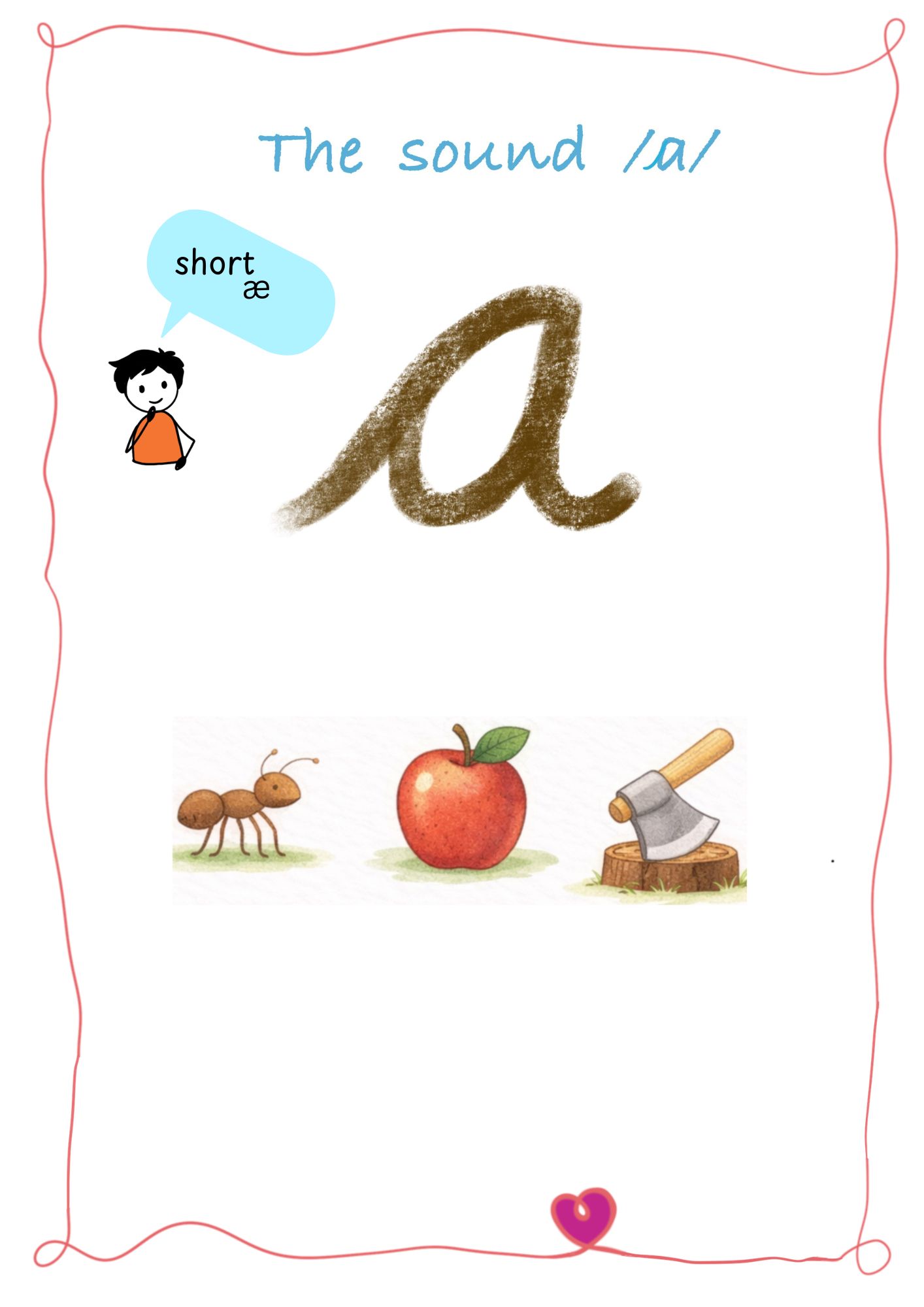
Following the Montessori approach to language, this workbook focuses on sounds before letter names. Children are gently introduced to the sounds /m/, /a/, and /t/ using lowercase cursive letters, familiar objects, and simple activities that invite observation, listening, and recognition.
The workbook supports early phonemic awareness by helping children hear beginning sounds in real words such as mat, mug, moon, ant, apple, axe, truck, time, and tree. Instead of forcing writing or tracing, the child is encouraged to listen, speak, point, circle, and connect sounds with real objects.
Parents and educators are guided on how to sit beside the child, speak softly, stop before tiredness, and keep lessons short and joyful. This makes the resource suitable for children who are just beginning their phonics journey.
This resource can be used on its own or alongside Montessori materials such as sandpaper letters, sound objects, movable alphabet, or simple household alternatives like paper letters and small objects.
What makes this Montessori course special
This workbook includes:
Adult Guidance Pages
A simple guide for parents and educators on how to introduce sounds the Montessori way.
Montessori Sound Order Explanation
An introduction to the sound sequence m | a | t | s | i | p and why these sounds are introduced first.
Child Readiness Guide
A gentle checklist to help adults understand whether the child is ready for sound work.
Materials Suggestion Page
Ideas for using Montessori materials such as sandpaper letters, sound objects, movable alphabet, and simple home alternatives.
Sound Introduction Pages
Beautiful visual pages introducing:
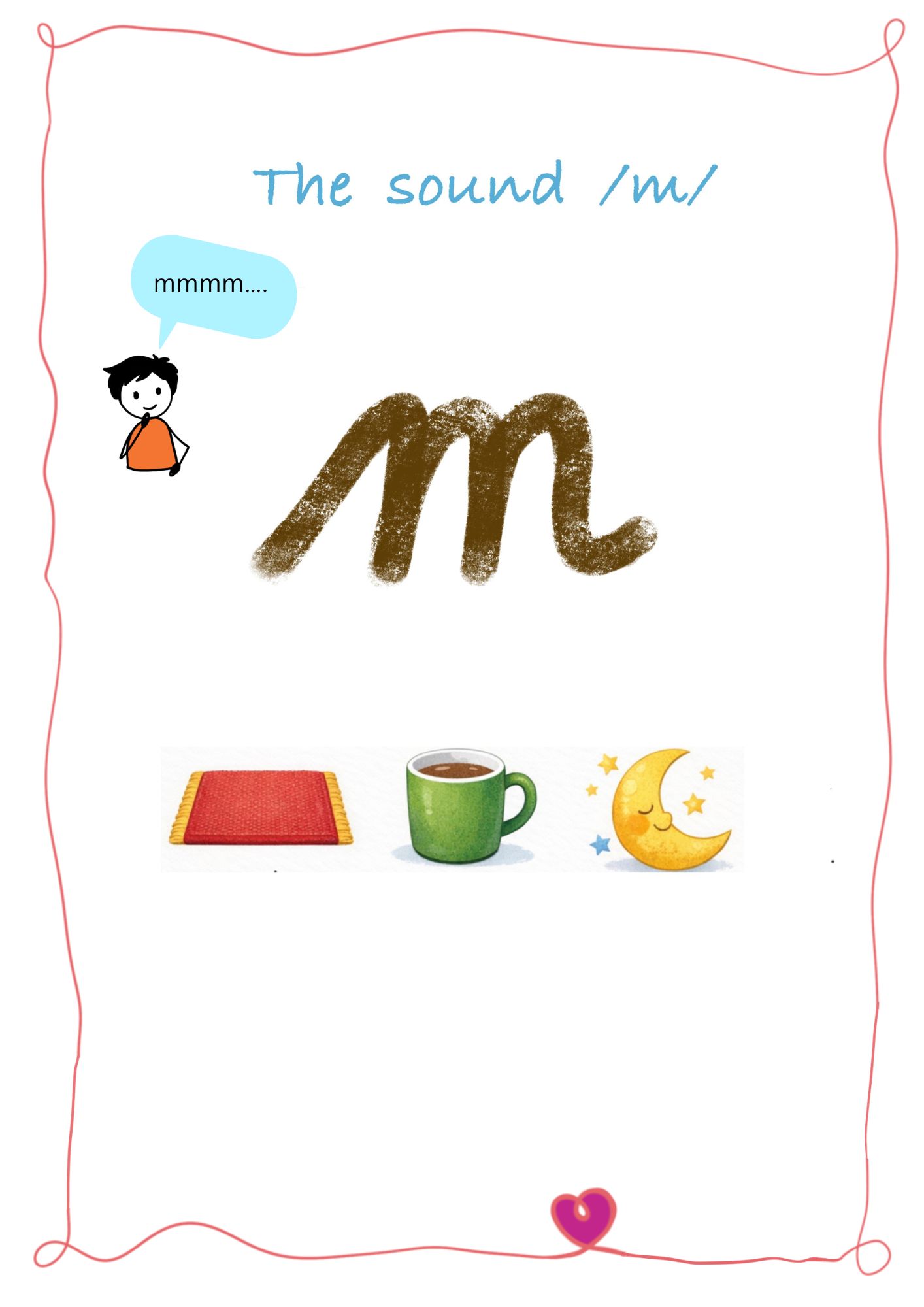
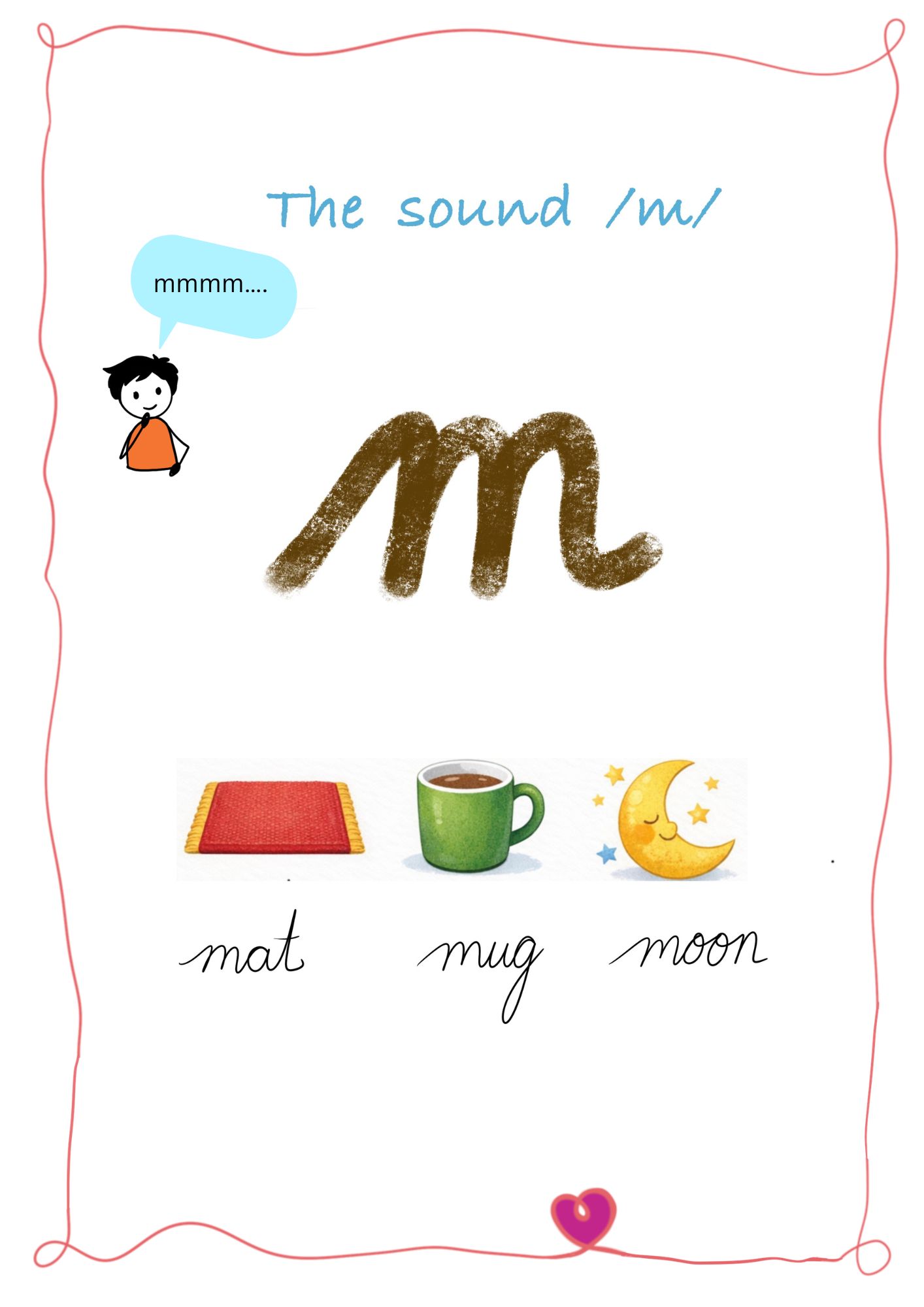
/m/ as in mat, mug, moon
/a/ as in ant, apple, axe
/t/ as in truck, time, tree
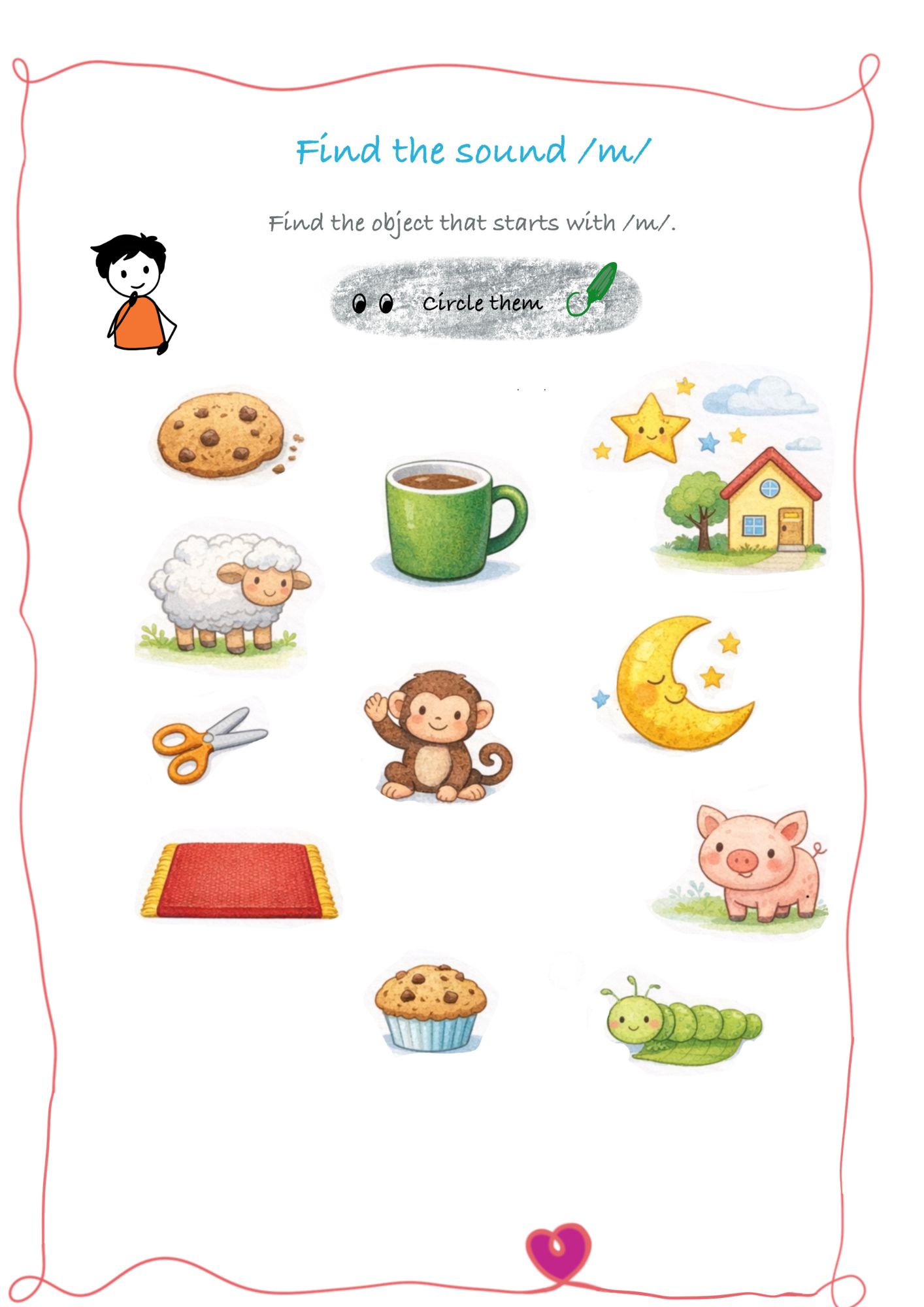
Find the Sound Activities
Child-friendly activity pages where children identify and circle objects that begin with the target sound.
By using this workbook, the child will begin to:
Recognize beginning sounds in familiar words
Connect sounds with lowercase letters
Build early phonemic awareness
Develop confidence before formal reading
Experience language through listening, speaking, and observing
Enjoy short, calm, Montessori-inspired lessons
Suitable for children around 3.5 to 6 years, depending on readiness.
Sandpaper letters
Sound objects
Movable alphabet
Small household objects
Parent or educator guidance
This workbook follows the Montessori principle that oral language comes first. Writing, tracing, and reading are not rushed. The goal is to help the child enjoy sounds, notice language, and build a strong foundation for reading.
Topics, activities, and learning experiences
This workbook introduces children to early Montessori phonics through a sound-first approach.
The content includes:
1. Adult Guidance
Parents and educators are guided on how to introduce sounds gently using the Montessori approach. The workbook explains how to say sounds clearly, sit beside the child, speak slowly, and stop before the child becomes tired.
2. Montessori Sound Order
The workbook introduces the beginning sound sequence m | a | t | s | i | p, helping children build early confidence with simple sounds and words.
3. Child Readiness Guide
A simple readiness page helps adults understand whether the child is ready for sound work. It explains that the child does not need to know letter names, write letters, or sit for long periods.
4. Materials Guidance
Suggestions are included for using sandpaper letters, sound objects, movable alphabet, paper letters, small household objects, and sensory tracing alternatives.
5. Sound Introduction Pages
The child is introduced to the sounds:
/m/ — mat, mug, moon
/a/ — ant, apple, axe
/t/ — truck, time, tree
6. Find the Sound Activities
The workbook includes visual activity pages where children identify and circle objects that begin with the target sound.
7. Oral Language and Observation
The activities encourage the child to listen, notice, speak, point, and connect sounds with familiar objects before formal writing or reading is expected.
Extra details for your planning
This is a printable Montessori-inspired phonics PDF workbook for early childhood language development.
Recommended Age:
Approximately 3.5 to 6 years, depending on the child’s readiness.
Format:
Printable PDF workbook
Best For:
Parents
Homeschooling families
Montessori educators
Preschool teachers
Early phonics practice
Language shelf work
How to Use:
Use one or two pages at a time. Begin with oral sound work before moving to activity pages. Say the sound softly and clearly, such as /m/ instead of “em” and /s/ instead of “ess.” Let the child observe, listen, point, circle, and respond naturally.
Montessori Note:
This workbook follows the principle that sounds come before letter names and oral language comes before writing. Tracing and pencil work are optional. The goal is not to rush reading, but to help the child enjoy sounds and build a strong foundation for future reading.
Usage Rights:
This resource is for personal, homeschool, or classroom use. It may be printed for your own child or classroom. Redistribution, resale, or uploading to public sharing platforms is not permitted.